
I couldn’t find any pictures of Ashely so I picked this.
I have been thinking about writing this for a very long time. It’s hard and sad, and I really didn’t want to. But it had to come out. God, the universe, the fates—maybe Ashley herself—or maybe it’s just me, stuck on this. Either way, here it is.
I had two very good jobs in prison. One was being a mentor in the Acute Care Unit—the mental hospital of the prison. This is where they housed the “criminally insane,” for lack of a better term. My role was to teach skills recommended by the therapy team and to run groups like creative writing, or anything else they asked for.
My other job was Peer Observation Aide (POA). That job meant sitting in front of the door of someone on suicide watch. My job was literally to keep my eyes on them, make sure they didn’t harm themselves, and if they tried, to loudly shout for officers to come and intervene.
Both jobs required screening and approval. I was vetted for them, and I was honored to have them.
Ashley Harris was a young woman with red hair, pale skin, and a bright, easy smile. She had been on suicide watch for a long time. She was also housed in the Acute Care Unit.
From what other women told me—women who had been there longer than I had—Ashley came into prison “normal,” functioning in general population just fine. But she lost her twin sister, and that changed everything.
After that, she fell into a cycle: suicide watch, then the most restrictive environment, and back again. Because of my two jobs, I had a lot of contact with her.
And I want to say this clearly: Ashley was adored. For someone who wasn’t in general population, she had an unusual kind of popularity. The women who worked POA shifts loved her. She didn’t have a wide reach, but she didn’t need one. That was her energy. That was her vibe. She had a sweetness that felt almost childlike.
Here’s what her day-to-day looked like. She was in a room 24/7, always with another inmate assigned to watch her. Therapists checked on her daily. Officers did rounds, too. She had a lot of eyes on her and a lot of people moving through her orbit.
So while this wasn’t a good situation, it also wasn’t solitary confinement. She wasn’t thrown away into some dark corner. And I don’t know the details of her mental health. I’m not here to diagnose. I’m not here to judge the system. I’m just telling what I saw and what I know.

She had dreams. Big, huge, wonderful dreams.
When I sat with her, she loved to talk about food and restaurants. She dreamed of opening her own place someday, and we could talk for hours about it—menus, ideas, favorites, all of it.
I told her I loved books and that I’d written one. That lit her up. She got curious fast and started asking about writing—page numbers, length, how books are built.
I explained word count versus page count and gave her a simple trick: pick a book, count the average number of words on a page, and then use that to estimate how many pages her own writing might be.
She had access to crayons and paper through her therapist, and she took real joy in it. She was genuinely delightful.
At the time, I was living in a room with fifteen other women. One night, a woman came back from a POA shift and woke us with the news: Ashley had died.
Ashley was only in her thirties. It didn’t feel real. We all became emotional immediately. This wasn’t just “an inmate.” This was someone we knew, someone we cared about, someone we had watched over. We were invested.
Within an hour, I was called to the officer’s desk along with India, Amber, and Lori. The four of us were mentors in the Acute Care Unit—the same unit where Ashley was housed.
We were told a deputy wanted to see us over there. We assumed it was about Ashley, and it was.
The deputy asked us to meet with the women in the unit and offer comfort until the therapists arrived. It would be a couple of hours before they could get there. We were also asked to shut down rumors, because at that point nobody had confirmed anything beyond the basics.
Here’s what we were told:
Ashley was found unresponsive in her cell. The POA on duty became alarmed when Ashley wasn’t moving and called the officer. The officer responded quickly. An ambulance was called. CPR was performed.
The women in that unit—the ones housed near Ashley—would have seen it. The others would have heard it. In prison, bad news travels through doors and vents and yelling. People were calling out to each other, trying to piece together what was happening in real time.
It must have been terrifying. And these were already emotionally fragile women. I can’t imagine what it felt like for them—watching one of their own, one of ours, being worked on like that.
And then we were expected to step in.
We weren’t grief counselors. We were inmates with mentor roles because of our behavior and because we wanted to do something meaningful with our time. But grief like that? Trauma like that? None of us were prepared.
So we made a plan. Two of us would meet with anyone who needed it individually. The other two would set up a circle of chairs so women could come sit together, talk, cry—whatever they needed. And we would listen.
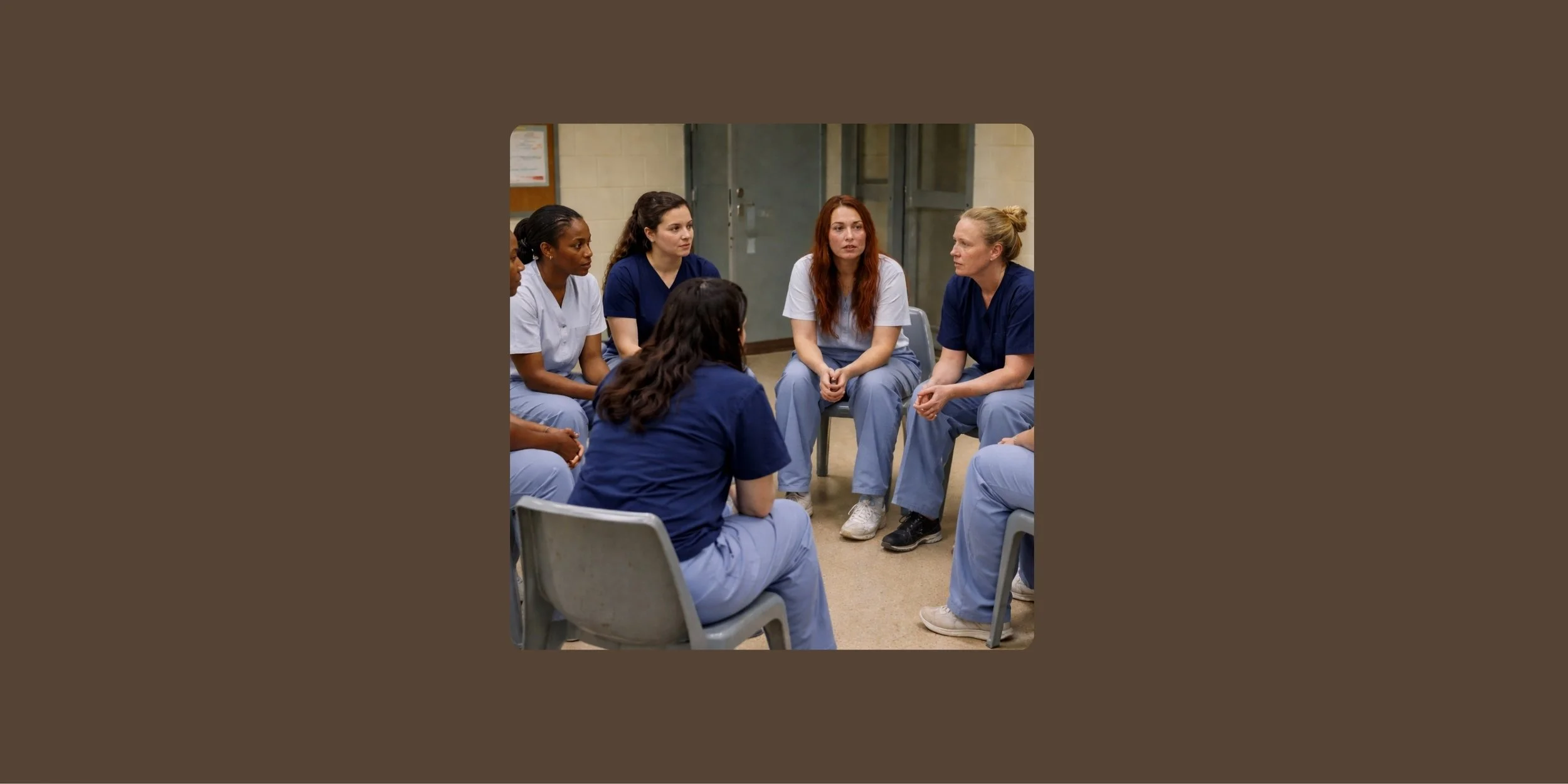
That’s what we did until the therapists arrived.
Women moved back and forth between the individual support and the group. Tears—so many tears. We asked them what they saw, what they heard, what they felt. Then we asked them to tell stories about Ashley. And in between the sobbing, there were smiles. There was laughter. Then more tears.
The hardest part in the beginning was the uncertainty. Everyone had a theory, and theories turn into “facts” in about five minutes when people are scared. So we held the line on the only honest answer we had:
We don’t know. Nobody knows. Nobody knows.
When the therapists finally arrived, the unit fell apart all over again. Of course. And I’m sure the therapists were able to give them what we couldn’t.
When we were finally released to go back to our housing unit, the four of us stepped outside and started to weep. There is no hugging in prison, and we were out on the walkway. But we just sobbed anyway. Every tear we held back while we were “being strong” in that unit came out right then.
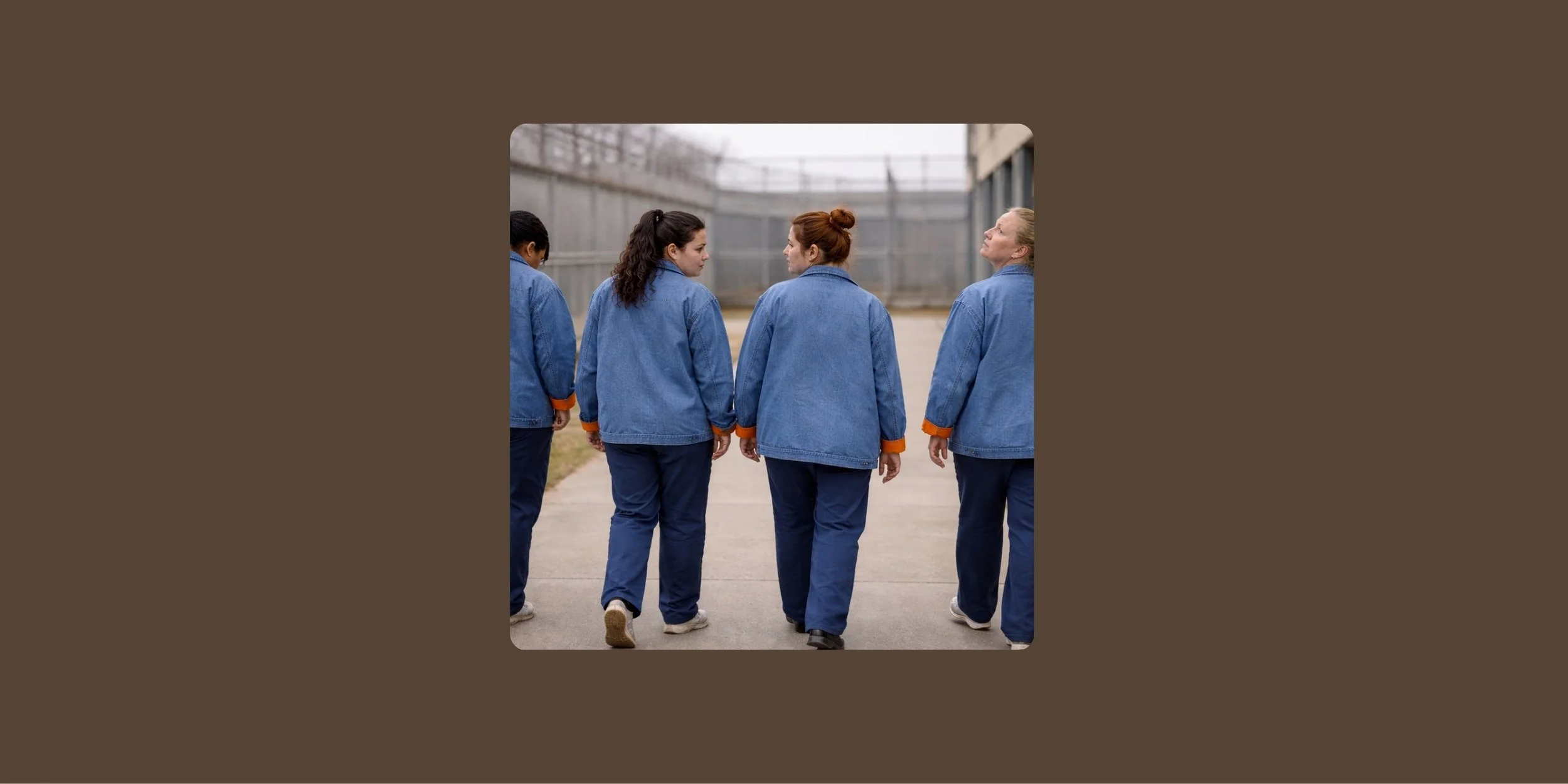
We were never officially told what happened.
Later, when I looked it up, it appeared to be a medication issue. The family settled out of court.
If there is one thing I would tell her family, it’s this: Ashley was not alone. Every day there was someone at her door who cared about her and loved talking with her. Most days there were many someones.
And I want people to understand what that means inside a place like prison. It means she mattered. It means her name wasn’t just a number on a chart or a face behind a door. It means she made people softer in a place that trains you to harden up.
I know I’m not the only one who will never forget her. She made a difference in a very dark place. And even now, telling her story, I’m still hoping the same thing for all of us: that we leave something human behind—something kind, something real—no matter where we are.

Until we meet again…